InfiniBand vs. Ethernet: Choosing the Right Network Fabric for AI Clusters

When scaling an AI cluster for large language models (LLMs), high performance computing (HPC), or enterprise AI, your choice of backend network fabric can significantly impact performance, cost, and scalability. Should you choose InfiniBand or Ethernet?

InfiniBand has been the dominant choice for hyperscale AI due to its ultra-low latency and efficient scaling. However, Ethernet is evolving quickly, supported by the Ultra Ethernet Consortium (UEC) and new AI-optimized offerings like NVIDIA’s Spectrum-X platform.

Both networking options currently offer 400G throughput, and 800G hardware is beginning to ship with platforms like NVIDIA B300 and next-gen switches. The right choice depends on your workload size, cluster architecture, and budget.

InfiniBand: High-Performance Interconnect for Hyperscale AI

Throughput: 200–400 Gbps per port, with next-gen 800G systems just starting to ship

Latency: ~1–2 µs, ideal for gradient-heavy training at scale

Native RDMA: Hardware-offloaded, ensuring efficient GPU-to-GPU communication

Deployment: Common in large-scale LLM training and HPC supercomputing environments

Best for: Clusters with 32+ nodes where performance consistency, scaling efficiency, and predictable latency are critical.

Ethernet: A Cost-Effective and Flexible Alternative

Throughput: 100–400 Gbps typical, with 800G Ethernet available from NVIDIA, Broadcom, Arista, and others

Latency: Tuned RoCEv2 delivers approximately 5–10 µs

Ecosystem: Multi-vendor, cost-efficient, and deeply integrated with cloud-native infrastructure

Momentum: Backed by the Ultra Ethernet Consortium and validated by NVIDIA’s Spectrum-X, Ethernet is moving from “good enough” to AI-optimized

Best for: Mid-size AI clusters, inference deployments, and cost-sensitive R&D environments.

InfiniBand vs. Ethernet: Side-by-Side Comparison
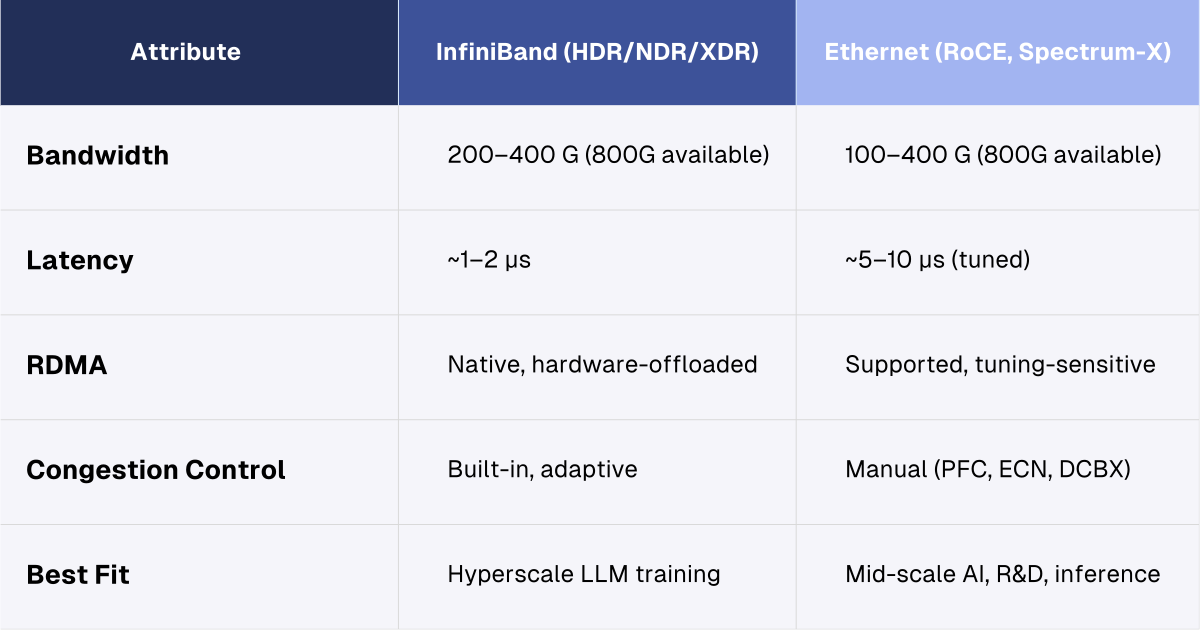
InfiniBand vs Ethernet: Key performance differences for AI clusters

GPU Utilization Matters

Your network fabric directly impacts GPU utilization, which drives time-to-train and total cost of ownership. InfiniBand helps sustain high utilization in large-scale clusters by reducing synchronization delays. Ethernet can also deliver strong utilization in smaller or well-tuned environments, but may require more careful configuration to avoid bottlenecks at scale.

Cost and Operational Considerations

InfiniBand often comes with a higher upfront and operational cost, but delivers better performance at hyperscale. Ethernet provides more flexible, cost-efficient options and is better suited for smaller clusters or hybrid deployments. Organizations with strong DevOps and cloud-native infrastructure can often make Ethernet work well for many AI workloads.
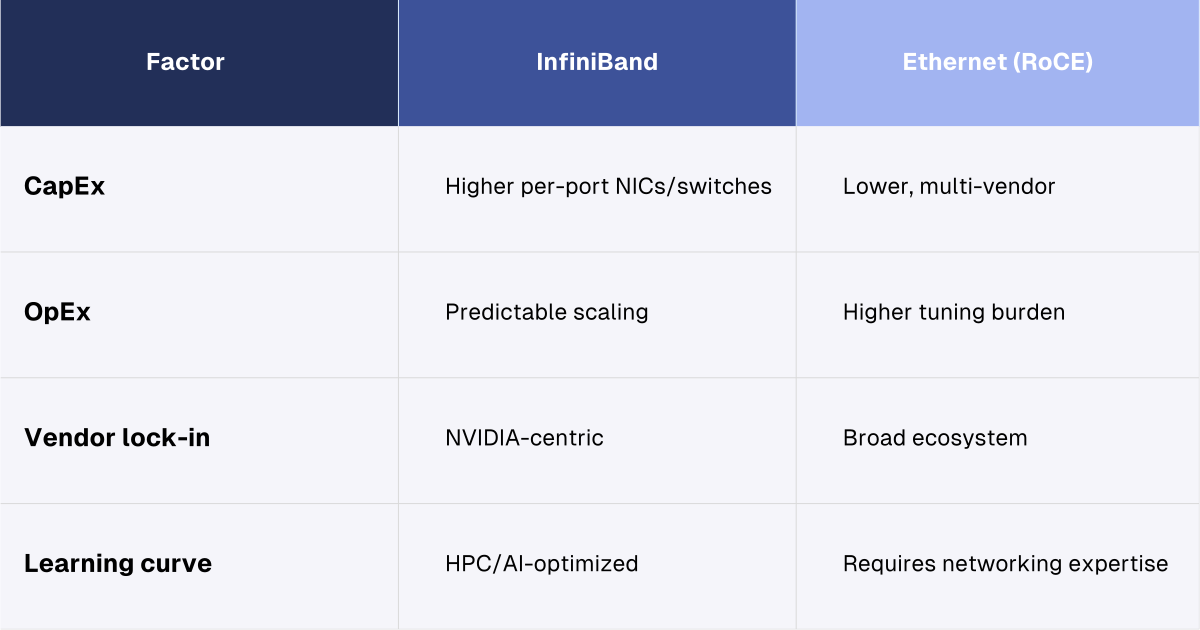
InfiniBand vs Ethernet cost and performance comparison for AI infrastructure

InfiniBand vs Ethernet cost and performance comparison for AI infrastructure

When to Choose Each Fabric

The market is evolving toward a dual-path future: InfiniBand for hyperscale performance, and Ethernet for broad accessibility and cost-effective AI compute.
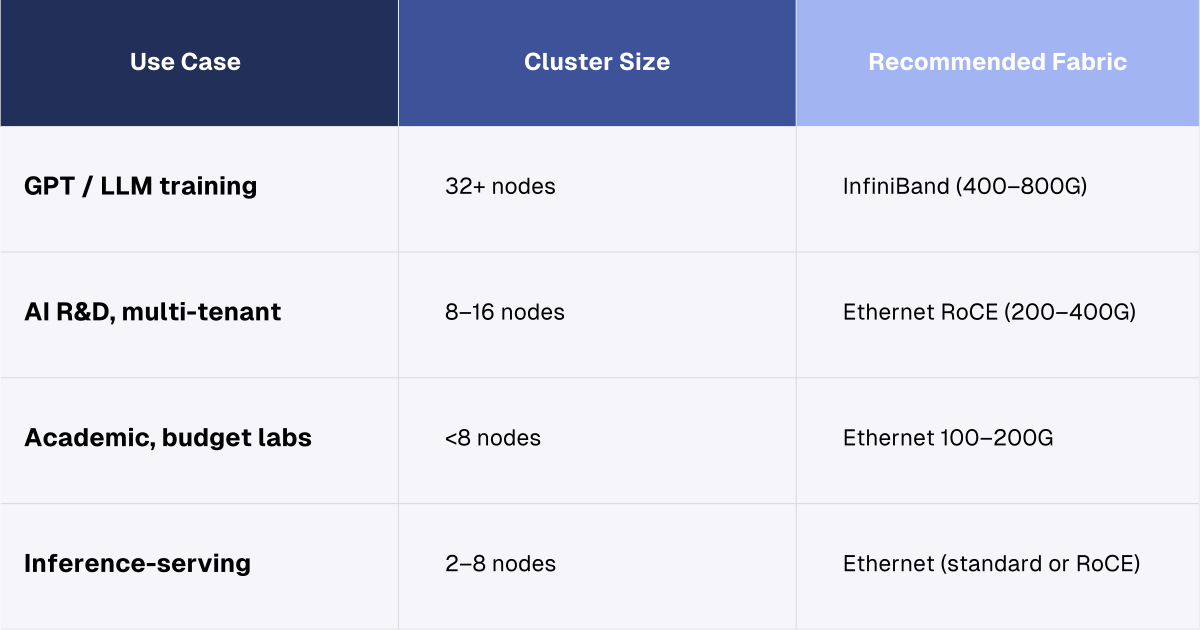
InfiniBand vs Ethernet: Best fabrics by AI workload and cluster size.

Strategic Takeaways for LLM Training

  • InfiniBand = predictable scaling at hyperscale
    Still the top choice for GPT, LLaMA, Claude, and multi-billion parameter training
  • Ethernet = cost-efficient scale
    Viable for enterprise AI, inference, and R&D with 800G platforms
  • The future is dual-track: InfiniBand for hyperscale, Ethernet for the majority of AI clusters

How Arc Compute Helps

At Arc Compute, we tailor GPU and networking solutions to each client’s unique scale and goals. We assess workloads, architecture, and budget to recommend the right interconnect.

  • InfiniBand Superclusters: Built using NVIDIA HGX with 400G/800G Quantum-2 fabrics
  • Ethernet AI Clusters: Cost-optimized deployments using Spectrum-X and other 800G-capable platforms

Example: In Boson AI’s 65-node H100 training cluster, we implemented 400G InfiniBand using Quantum-2 switches, delivering high utilization and predictable scaling.

Planning your next build? Talk to our team about the right interconnect for your needs.

Frequently Asked Questions

Q1. Which is better for LLM training?
For clusters with 32 nodes or more, InfiniBand typically provides better latency and scaling. For smaller or experimental setups, Ethernet may be sufficient.

Q2. Does NVIDIA support Ethernet for AI?
Yes. NVIDIA is a founding member of the Ultra Ethernet Consortium and has released AI-optimized Spectrum-X 800G Ethernet switches.

Q3. How do performance characteristics differ?
InfiniBand has lower latency (~1–2 µs) and better performance consistency at scale. Ethernet with RoCEv2 offers ~5–10 µs latency and can be tuned for AI workloads.

Q4. Is Ethernet ready for AI workloads?
Yes. With 800G switches, growing vendor support, and UEC standards, Ethernet is increasingly being adopted in AI training and inference environments.

Final Thoughts

If you’re building a hyperscale LLM training cluster, InfiniBand remains the gold standard for performance and reliability. But for most AI deployments, including inference, R&D, and mid-size training, Ethernet is now a viable, cost-effective option.

Smart infrastructure starts with smart choices. Arc Compute is here to help you design the interconnect that best supports your AI goals.

Cutting Costs and Latency in 4 Weeks: Inside a Trading Firm’s GPU Upgrade

When it comes to building trading infrastructure, the choice between cloud and on-premise GPUs is not just about technology. It’s about speed, cost, and competitive advantage. For real-time analytics and latency-sensitive trading strategies, the wrong infrastructure can slow performance, increase costs, and hurt profitability.

Lynx Trading Technologies, a New Jersey-based trading firm, recently faced these challenges. Their analytics and ML workloads were running in the cloud, but monthly costs fluctuated dramatically, performance suffered during peak market activity, and they had limited control over tuning their environment. They needed consistent performance, ultra-low latency, and full control.

In just four weeks, Arc Compute delivered a fully customized on-premise NVIDIA HGX B200 deployment that solved all of those issues.

Why Trading Firms Are Shifting to On-Prem GPUs

Cloud infrastructure is a fast and flexible entry point for GPU workloads. But in finance, its limits are quickly exposed. Costs spike during market volatility, performance varies under heavy loads, and hardware-level optimization is out of reach. For high-frequency trading, where milliseconds matter, colocated infrastructure delivers low latency, predictable cost, and direct control.

Cloud GPU Instances vs. On-Prem GPUs

The Move: From Cloud to NVIDIA HGX B200 in 4 Weeks

Arc Compute partnered with Lynx Trading to design and deliver a tailored system aligned with their performance goals and budget.

Hardware Delivered:

  • 2x NVIDIA HGX B200 8-GPU systems (Air-Cooled) manufactured by Aivres

System Specs:

  • 2× Intel Xeon 6767P 64-Core CPUs
  • 2 TB DDR5 ECC Memory
  • 8× NVIDIA 400 GbE ConnectX-7 NICs
  • High-speed NVMe storage for real-time throughput
  • 3-Year Next Business Day Onsite Warranty & Support

Deployment Highlights:

Location: High-security colocation facility in Secaucus, NJ, just miles from major exchanges
Timeline: Four weeks from quote approval to full installation
Support: Deployment led by Lynx engineers with hands-on support from Arc Compute’s manufacturing partner, Aivres

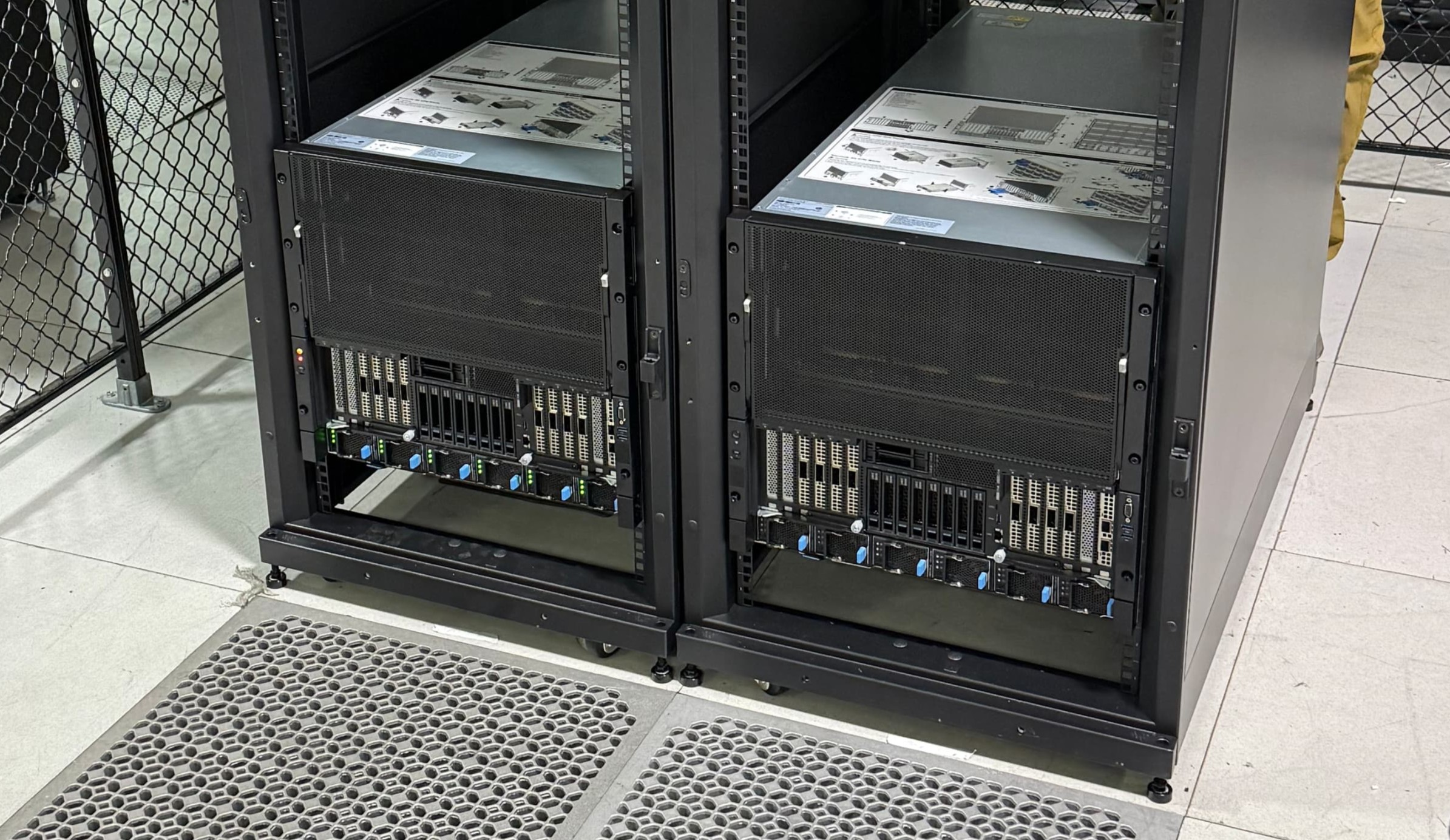
Arc Compute helped deliver 2x Aivres-builtLynx's B200 infrastructure deployed in their Secaucus-based colocation facility.
Arc Compute helped deliver 2x Aivres-built NVIDIA HGX B200 8-GPU systems to Lynx’s Secaucus-based colocation facility

Why NVIDIA HGX B200?

Arc Compute recommended the NVIDIA HGX B200 for its ability to support AI-driven trading workloads at scale:

  • Massive compute capacity for real-time analytics and model execution
  • 180 GB of HBM3e memory to manage large datasets without slowdowns
  • High bandwidth to process market data streams instantly
  • Low-latency networking to execute trades faster
  • Future-ready architecture to scale into more complex models and strategies

Compare NVIDIA GPU options to see how the B200 compares to other models.

The Results

With Arc Compute’s solution, Lynx Trading achieved:

  • Lower latency by moving infrastructure closer to exchanges
  • Stable, predictable costs by replacing variable cloud spend with fixed capital investment
  • Full control for optimizing both hardware and networking
  • High reliability through dedicated infrastructure and warranty-backed support

“Arc Compute made the entire process smooth, from quoting to delivery. Their team was responsive and knowledgeable and helped us get the right configuration. The delivery and support have been excellent end-to-end.”

– Samuel Vasilevskiy, Datacenter Engineer, Lynx Trading

Trends in Trading Technology

Lynx’s move reflects a broader trend across the financial sector:

XTX Markets is building a new campus in Finland, expected to provide 22.5 MW of GPU-powered compute capacity to fuel AI-driven trading.

ICE is incorporating Reddit sentiment data, leveraging over 1 billion monthly posts and comments for alternative market insight.

According to Traders Magazine, firms with steady, high-volume compute needs are increasingly turning to on-prem GPUs for predictable performance and cost.

The takeaway is clear: when microseconds matter, owning your infrastructure creates a competitive edge.

How Arc Compute Delivers Performance and Predictability

Lynx Trading’s transformation was the result of three critical ingredients: the right hardware, the right deployment model, and the right partner. Arc Compute specializes in helping trading firms:

  • Select and configure GPUs for ultra-low-latency workloads
  • Procure and deploy systems quickly in colocation facilities
  • Optimize infrastructure for performance, cost, and scale

Whether you’re leaving the cloud, upgrading your stack, or exploring hybrid models, we’re ready to help.

Contact us to learn how NVIDIA HGX B200 or other GPU platforms can give your trading infrastructure a strategic edge.

Should You Wait for NVIDIA B300 or Go with H200 or B200 Now?

UPDATE

NVIDIA HGX B300 GPU Servers are now available to order.

When it comes to scaling AI infrastructure, deciding whether to wait for the NVIDIA B300 or move ahead with the H200 or B200 isn’t just a purchase decision, it’s a strategic investment in your AI roadmap. If you’re running high-performance workloads or dealing with enormous models, understanding how each GPU affects your performance, scalability, and long-term viability is key.

Let’s cut through the hype and help you decide: should you deploy now, or hold out for the next leap in AI compute?

H200 vs B200 vs B300: At-a-Glance Comparison

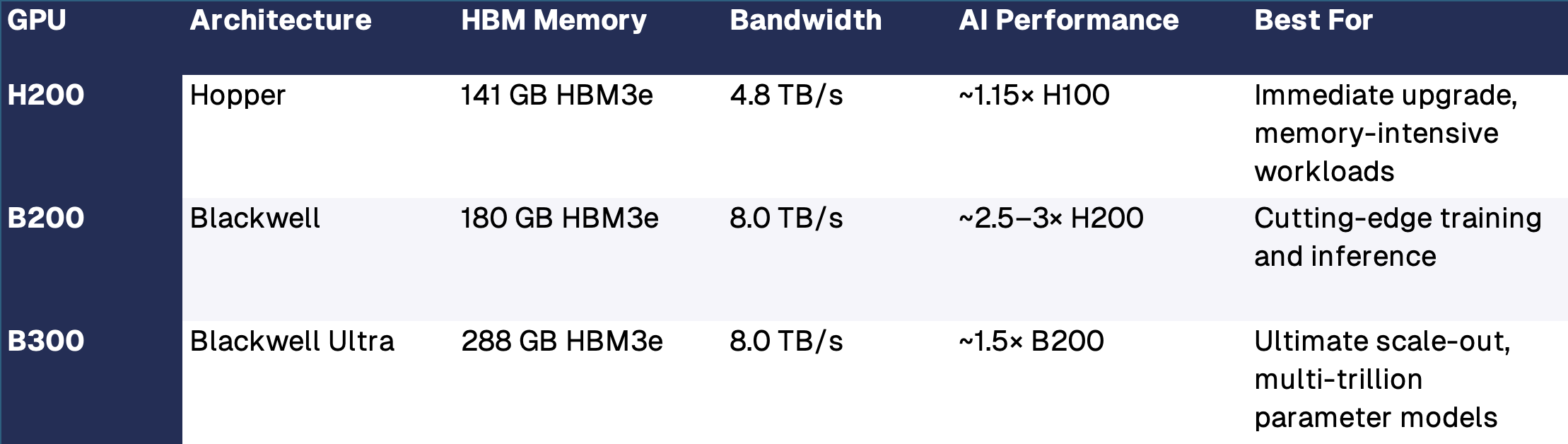
We’ve distilled the essential specs so you can compare your options:

GPU Comparison
NVIDIA H200 vs B200 vs B300: Architecture, memory, bandwidth, and AI performance at a glance.

‍Availability & Pricing: What to Expect

Understanding lead times and price points is crucial for planning your infrastructure investments:

NVIDIA HGX H200:

  • Lead time is 4-6 weeks. OEMs are gradually transitioning focus to B200, but stock is still flowing. Price point is in the mid $200K range.

NVIDIA HGX B200:

  • Lead time is typically 3-4 weeks, depending on the OEM. We’ve had excellent results working with Aivres, which has delivered units quickly and reliably. Pricing usually falls in the mid $300K range.

NVIDIA HGX B300:

  • Not expected until late 2025. Pricing will likely be $400K+ given its advanced scale and premium capabilities.

Why Choose H200?

The H200 is an ideal short-term upgrade path for teams currently running Hopper-based workloads via H100 GPUs. It delivers:

  • More memory (141 GB HBM3e) for training larger models
  • Faster bandwidth (4.8 TB/s) over H100
  • ~1.4x performance gain without needing major infrastructure overhauls

Perfect for:

Teams that need a low-friction performance boost now without switching to a new architecture.

Why Choose B200?

The B200 is a performance leap. With a dual-die design, FP8/FP4 support, and ultra-high bandwidth, it provides:

  • 2.5–3× speedup over H200
  • 180 GB of HBM3e memory for heavy workloads
  • Future-proofing for years of demanding AI projects

If you’re training LLMs, building AI inference platforms, or need next-gen throughput today, the B200 is ready.

Ideal for:

Forward-looking teams investing in scalable AI infrastructure in the immediate future.

Why Wait for B300?

The B300 is designed for AI at a planetary scale. With 288 GB of HBM3e and unprecedented AI compute, it is:

  • ~1.5× faster than B200, ideal for trillion-parameter models
  • Engineered for massive inference clusters and high-density training farms
  • Projected to ship in late 2025 with pricing likely exceeding $400K

Hold out only if:

You’re running massive multi-node AI clusters and can delay deployment for another 6-12 months.

Choosing the Right GPU for Your AI Roadmap

Here’s a quick decision matrix:

Choose H200 if:

  • You need more memory immediately.
  • You want a safe upgrade from H100 without changing architecture.
  • You’re under tight deployment timelines.

Choose B200 if:

  • You want the best available AI performance today.
  • Your models are already straining infrastructure limits.
  • You’re investing in long-term scale with flexibility.

Wait for B300 if:

  • You’re building for the extreme scale of next-gen AI.
  • Your deployment can wait until late 2025.
  • You need peak memory and compute density for future LLMs.

Wild Card Option: NVIDIA RTX PRO 6000 (Blackwell)

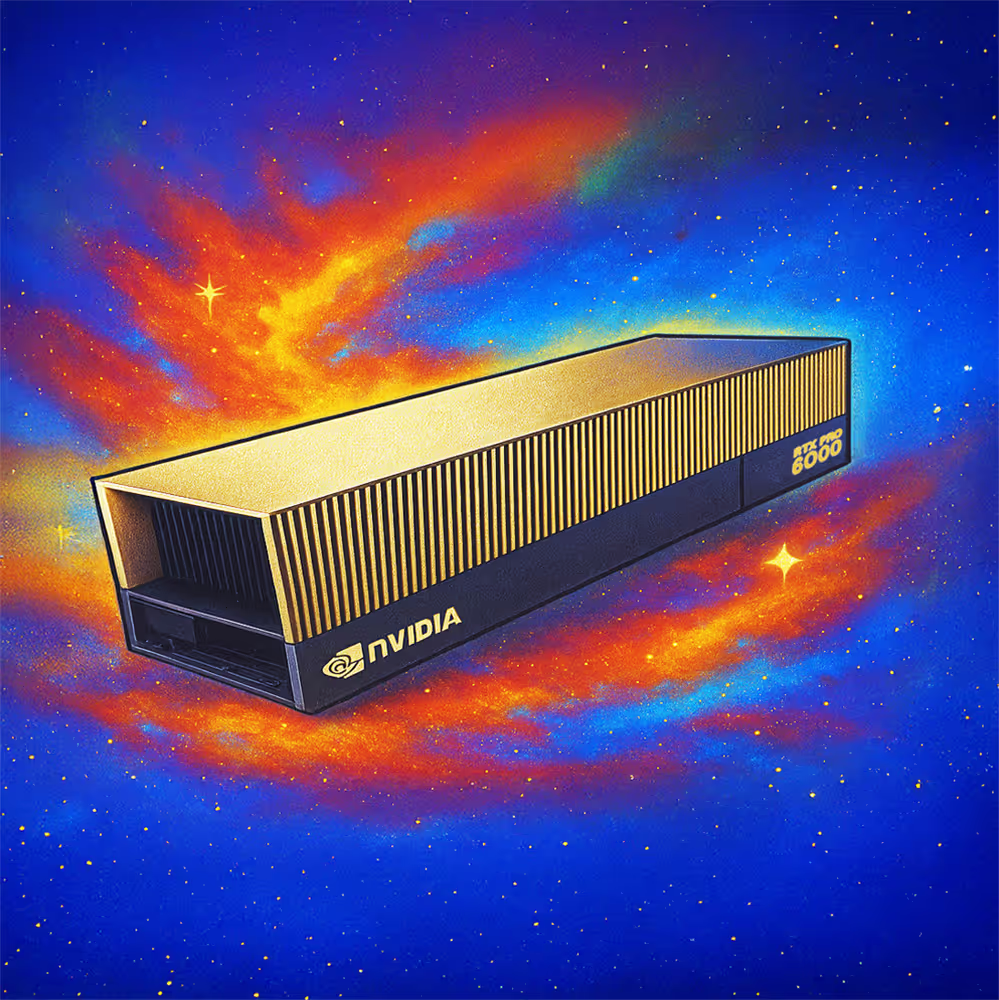
For teams focused on AI inference and looking for an alternative to SXM-based GPUs, the NVIDIA RTX PRO 6000 (Blackwell architecture) is a compelling option. These PCIe-based GPUs are significantly more budget-friendly than H200 or B200 servers, with 8-GPU systems starting at $115,000 USD, making them ideal for organizations scaling inference workloads without the capital demands of high-end server deployments.

Ideal for:

Teams focused on inference-heavy tasks or edge deployments, and startups looking for performance without breaking the bank.

Key benefits include:

  • Built on the Blackwell architecture for modern AI workloads
  • High throughput with FP8/INT8 compute
  • Plug-and-play PCIe form factor that integrates easily into existing infrastructure
  • Excellent performance-per-dollar for inference at scale

Use case fit:

Ideal for commercial applications where cost-efficiency, fast deployment, and power-optimized inference matter more than peak training throughput.

NVIDIA RTX PRO 6000 (Blackwell)
NVIDIA RTX PRO 6000 Server Edition GPU (Blackwell)

Arc Compute Can Help

At Arc Compute, we help teams navigate complex GPU decisions. Whether you’re upgrading, scaling, or preparing for next-gen AI, we can help you:

  • Compare OEM lead times and pricing
  • Optimize your deployment window
  • Build a roadmap for hybrid GPU adoption

Talk to an expert now to discuss H200, B200, B300, or RTX PRO 6000 solutions. You can also send us an email at sales@arccompute.io.

5 GPU Infrastructure Challenges We Hear Every Week

Building modern GPU infrastructure isn’t just a technical hurdle. It’s a complex mix of procurement strategy, system design, and long-term planning. Whether leading an AI team at a fast-growing startup or managing infrastructure at an enterprise scale, you’ve likely encountered some of these common pain points.

At Arc Compute, we speak daily with AI labs, cloud providers, and HPC researchers. Across all industries, the same core challenges surface time and time again. Here’s what we hear and how we help teams move forward.

1. “Lead times are insane. Why does it take 12+ weeks to get servers?”

What we hear:

“We’re scaling fast and can’t afford to wait three months for hardware.”

What’s going on:

Most GPU systems are built to order, not kept in stock. Demand for high-performance SKUs like the H100H200, and B200 continues to grow, which puts pressure on supply chains.

How we help:

We work closely with OEM partners like Aivres, Supermicro, and Dell to align production schedules and prioritize fast-turnaround configurations. As a result, we can often ship custom systems in as little as two to three weeks, even when others are quoting multi-month timelines.

2. “Cloud GPUs are getting too expensive. On-prem still feels risky.”

What we hear:

“We’re spending $40K a month on cloud GPUs. Is it actually worth it?”

What’s going on:

Cloud offers short-term flexibility, especially for early-stage experimentation. However, hyperscalers tend to package rigid infrastructure with high markups and unpredictable pricing. For teams running sustained workloads, cloud bills quickly become difficult to justify.

How we help:

We provide immediate access to H100 cloud instances at unbeatable prices, giving you short-term flexibility without vendor lock-in. At the same time, we help model long-term savings of moving to on-prem. Most customers see a 30 to 60 percent cost reduction over two to three years. If needed, we can also bridge the gap with cloud access while we plan and deploy your on-prem systems.

3. “There are just so many decisions. We don’t want to get it wrong.”

What we hear:

“We know what we want to achieve, but the number of options is overwhelming.”

What’s going on:

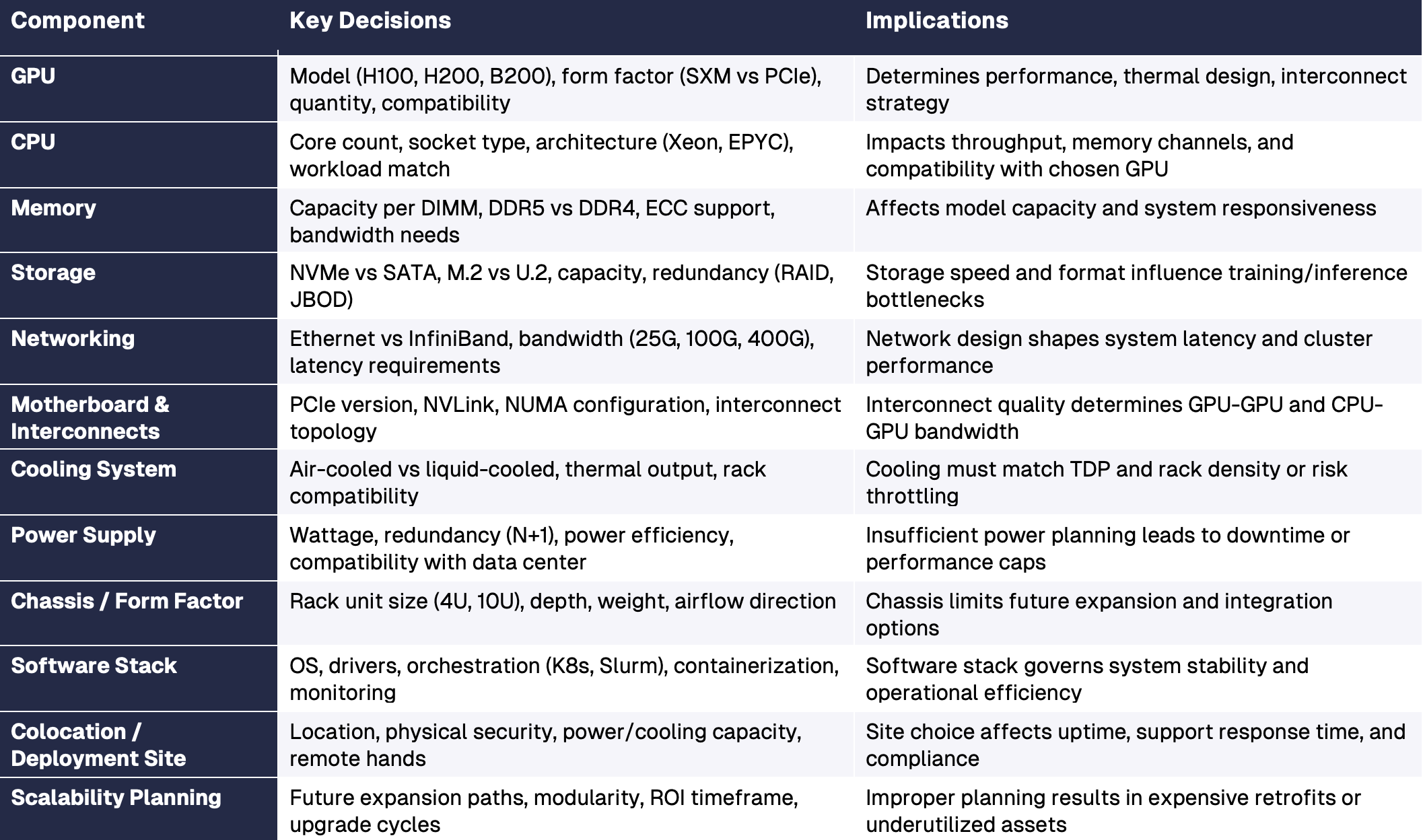
Even experienced teams run into decision fatigue. Choosing the right GPU is just the beginning. Every component—CPU, memory, interconnect, storage, cooling, and deployment location—affects compatibility, performance, and cost. One misstep can create bottlenecks or limit scalability down the road.

How we help:

We take a step-by-step approach to system architecture. From hardware selection to facility planning, we guide your team through each decision with clear technical guidance and real-world tradeoff analysis. For teams looking to move quickly or at scale, we also offer turnkey GPU infrastructure solutions that streamline procurement, configuration, and deployment—so you can move forward with confidence and focus on what matters most.

A high-level overview of key GPU infrastructure components, critical decisions, and their impact on system performance and scalability.

4. “Should we wait for B300 or go with H200 or B200 now?”

UPDATE: NVIDIA HGX B300  GPU Servers are now available to order.

What we hear:

“We’re considering B200, but we don’t want to buy something that’ll be outdated next quarter.”

What’s going on:

With NVIDIA’s B300 expected soon, it’s tempting to hold off. However, new hardware launches often come with limited availability, firmware bugs, and untested integrations. Waiting can also leave you stuck with underpowered infrastructure while costs continue to rise elsewhere.

How we help:

We take a balanced approach to these decisions. Hopper-based H200 systems are reliable and well-supported. B200 is newer, built on the Blackwell architecture, and already being deployed—but it’s still early in its lifecycle. We help evaluate whether it makes more sense to deploy stable systems now or phase in B300 when the timing, supply chain, and software ecosystem are ready.

The latest NVIDIA B300 baseboard, available now through Arc Compute

5. We Need Real Support, Not a Sales Funnel

What we hear:

“We’ve submitted forms to five vendors and only got one generic quote back, a week later.”

What’s going on:

The traditional hardware sales process is slow, impersonal, and often frustrating. You’re pushed through automated workflows, bounced between reps, and left chasing updates—all before you even speak to someone technical. When time and clarity matter most, you’re stuck waiting.

How we help:

We believe good infrastructure starts with good communication. When you reach out to Arc Compute, you’re connected directly with someone who understands what you’re building—whether that’s a solutions architect, a product engineer, or a senior member of our sales team. No scripts, no endless follow-ups, and no unnecessary steps. Just responsive, informed support that moves at your pace.

Let’s Solve This Together

If any of these challenges sound familiar, you’re not alone. And you don’t have to solve them by yourself.

At Arc Compute, we help startups, enterprises, and research labs move past procurement delays, cloud cost spirals, and design bottlenecks. Our systems are custom built, fast to deploy, and designed to scale with your needs.

Most importantly, we aim to build a true partnership that makes GPU infrastructure decisions easier, more transparent, and future ready.

Talk to a GPU Expert

Explore our NVIDIA HGX B200 Systems

How to Harness L2 Cache Optimizations for NVIDIA GPUs

In the rapidly evolving world of HPC, every millisecond saved can translate into significant performance gains and cost savings. At Arc Compute, we specialize in optimizing GPU performance and utilization and understand the importance of leveraging the latest advancements in GPU architectures. One such advancement is how best to utilize the L2 Cache Crossbar in NVIDIA GPUs, Ampere generation onwards. These optimizations present new opportunities for improving performance and efficiency in GPU-accelerated tasks, which ArcHPC can capitalize on to deliver even more value to its users.

The L2 Cache Split Partition: A Game Changer

NVIDIA introduced the L2 Cache split partition (Crossbar) in its GPUs to reduce latency and enhance memory access speeds. By splitting the L2 Cache, the GPU can serve memory requests more efficiently for Streaming Multiprocessors (SMs) on the same side of the GPU, minimizing the need to traverse the Crossbar—a process that incurs additional latency. However, memory access across the GPU still has a latency penalty, highlighting the importance of effective cache management.

For ArcHPC, which focuses on optimizing GPU throughput and kernel scheduling, this Crossbar presents a golden opportunity. By dynamically managing SMs and optimizing task allocation to ensure they are processed by SMs on the same side of the GPU, ArcHPC can reduce the need for Crossbar traversal, thereby decreasing latency and improving overall task performance.

L2 Cache Crossbar

Simplified representation of NVIDIA GPU Architecture

Tackling Latencies and Warp Stalls

One of the critical challenges in GPU optimization is managing latencies and warp stalls. Latency, the time it takes to execute an instruction, directly impacts a GPU’s efficiency. Warp stalls, on the other hand, occur when a warp (a group of threads executed in parallel) must wait for a previous instruction to complete before it can proceed. These stalls can significantly slow down task execution, especially in scenarios where memory access is involved.

ArcHPC can use its advanced kernel scheduling techniques to mitigate these issues. By understanding the specific latency characteristics of different instructions and optimizing the order in which they are executed, ArcHPC can minimize warp stalls and ensure a smoother, more efficient task execution. This approach is particularly beneficial when dealing with complex workloads that involve multiple memory accesses, as it reduces the cumulative impact of latency on overall performance.

Latency
Proper scheduling plays a critical role in reducing latencies.

Optimizing Crossbar Communication

The Crossbar is a critical component in NVIDIA GPUs, connecting SMs to caches further away. However, as mentioned earlier, Crossbar communication introduces additional latency—on average, 40 GPU cycles. This latency can be further exacerbated when SMs need to access memory from “far” caches multiple times.

ArcHPC’s strength lies in its ability to develop more intelligent scheduling algorithms that consider the GPU’s physical layout and data location within the L2 Cache. By optimizing the allocation of tasks to specific SMs based on their proximity to the required data, ArcHPC can minimize the need for crossbar communication and reduce the associated latency. This approach not only improves the speed of individual tasks but also enhances the overall throughput of the GPU, making it possible to run more tasks concurrently.

Crossbar Fast Path
Simplified representation of NVIDIA GPU Architecture

Smarter Scheduling for Enhanced Performance

Effective scheduling is the cornerstone of GPU optimization. More intelligent scheduling becomes even more critical in fully occupied GPUs, where all SMs are already in use. By accurately matching tasks with the most suitable SMs and ensuring that data is stored in the nearest cache, ArcHPC can increase the number of concurrent tasks and decrease the time required to complete them.

This optimization is particularly relevant when multiple SMs need to share information. If two SMs need to access the same data, ensuring the data is stored in the L2 Cache partition closest to both SMs can significantly reduce latency. ArcHPC can leverage its advanced kernel scheduling capabilities to implement these optimizations, further enhancing the performance of GPU-accelerated applications.

Basic SM Scheduling
Simplified representation of NVIDIA GPU Architecture

Leveraging L2 Cache Optimizations for Competitive Advantage

The advancements in L2 Cache management in NVIDIA GPUs offer a powerful tool for improving the performance of HPC and AI workloads. By understanding these optimizations and integrating them into its existing solutions, ArcHPC can deliver even greater value to its customers, helping them achieve faster, more efficient computations. Whether it’s reducing latency, minimizing warp stalls, or optimizing Crossbar communication, ArcHPC is well-positioned to take full advantage of these innovations, setting a new standard in GPU optimization.

AI in Healthcare: Enhanced Medical Practices for Improved Patient Care

The deployment of Artificial Intelligence (AI) in healthcare continues to revolutionize the industry, driving advancements that improve the efficiency, accuracy, and accessibility of medical services. With AI’s integration across various facets of healthcare—from data management to clinical operations and diagnostic technologies—patient care is being transformed, offering a more efficient, precise, and patient-centric approach.

Enhanced Data Analysis with AI

The ability of AI to manage and interpret both structured and unstructured healthcare data is pivotal in modern healthcare. Dr. Taha Kass-Hout highlights AI’s capability to structure and index vast datasets, enhancing their usability for healthcare professionals, which is crucial for leveraging the 97% of healthcare data that goes unused because it’s unstructured (HealthTech Magazine, 2023). Jay Baer underscores the transformative impact of AI by stating, “We are surrounded by data, but starved for insights,” emphasizing the necessity of AI in deriving actionable insights from vast data pools (CareerFoundry, 2023).

Moreover, the integration of AI in healthcare analytics is significantly improving disease prediction and management. According to a report from StartUs Insights, AI-powered big data analytics enable early disease detection by rapidly discerning relevant information from large amounts of medical data, thus facilitating timely interventions and improving patient care outcomes (StartUs Insights, 2023).

“We are surrounded by data, but starved for insights” – Jay Baer

Improving Clinical Operations

AI’s automation of routine, repetitive tasks in clinical settings is freeing up medical professionals to focus more on patient care. McKinsey reports that AI supports a shift from hospital-based care to more flexible, home-based care models by enabling technologies like remote monitoring and virtual assistants, thus enhancing patient management and care continuity (McKinsey, 2023). Further, the use of natural language processing (NLP) technologies is making medical care more accessible by improving communication between patients and healthcare systems using conversational AI, enhancing the overall patient experience (HealthTech Magazine, 2022).

In addition, AI-driven systems are increasingly being used to streamline clinical workflows and improve the efficiency of healthcare delivery. Dr. Juan Rojas from the University of Chicago explains how AI tools are now integral in clinical settings, significantly outperforming traditional tools like the Modified Early Warning Score (MEWS) for detecting clinical deterioration (AHA, 2023).

AI-driven systems are increasingly being used to streamline clinical workflows and improve the efficiency of healthcare delivery.

Advancements in Diagnostic Technologies

The greatest impact of AI in diagnostics has been in imaging and pathology. AI algorithms are now routinely used to enhance the detection and analysis of imaging data, thereby improving the accuracy of diagnoses. Dr. Rojas notes that AI-based assistance for lung nodule detection on CT scans is one of the most significant advancements in this area, improving the early detection of lung cancer (AHA, 2023).

AI algorithms are now routinely used to enhance the detection and analysis of imaging data.

AI is also revolutionizing the field of pathology by automating the analysis of tissue samples, which enhances the speed and accuracy of cancer diagnoses. These systems can analyze samples much faster than human pathologists, reducing the time for diagnosis and enabling quicker treatment decisions (BMC Medical Education, 2023).

As Artificial Intelligence (AI) continues to revolutionize healthcare, the role of Graphics Processing Units (GPUs) in supporting AI technologies has become increasingly pivotal. Originally designed for complex graphics and visual data processing, GPUs are now integral in accelerating the computational capabilities required for AI applications in healthcare.

Impact of GPU Infrastructure on AI in Healthcare

GPUs significantly enhance the speed and efficiency of AI algorithms, crucial for tasks such as processing large datasets, running complex simulations, and performing real-time data analysis. These capabilities are essential in healthcare settings where AI models must analyze vast amounts of medical imaging data, genetic information, and electronic health records to assist in diagnostics and treatment planning.

“It turns out that we’ve digitized a lot of things: Proteins and genes and brainwaves. Anything you can digitize, so long as there’s structure, we can probably learn some patterns from it. And if we can learn the patterns from it, we can understand its meaning. If we can understand its meaning, we might be able to generate it as well. And so therefore, the generative revolution is here” – Jensen Huang

For instance, in medical imaging, the use of GPUs allows for quicker processing of high-resolution images such as MRIs and CT scans. This acceleration is vital for implementing technologies like deep learning, which can identify patterns and anomalies that may be invisible to the human eye. “Performance, programming productivity, and open accessibility are essential to create a new AI computing [platform],” noted by NVIDIA, highlighting how GPUs speed up AI applications and support continuous innovation necessary in the healthcare industry (NVIDIA Blog, 2023).

Moreover, the real-time analysis capability of GPUs is crucial for critical healthcare applications, such as monitoring systems in intensive care units where patient data must be analyzed promptly to make life-saving decisions. Vincent Liu, MD, from Kaiser Permanente emphasized the potential of AI to improve patient care, stating, “There is a stage at which regulations can stifle some of the innovation [that AI might advance]… There is a role for providing a safe harbor [from certain regulations] so that we can use our best data to improve our patients’ care” (aiin.healthcare, 2023). This underscores the importance of regulatory flexibility to fully leverage GPU-accelerated AI in healthcare.

NVIDIA’s BioNeMo technology was highlighted at their GTC 2024 event, showcasing its impact on accelerating the drug discovery process through AI-driven models. Jensen Huang, NVIDIA’s CEO, emphasized the significance of this technology, stating, “It turns out that we’ve digitized a lot of things: Proteins and genes and brainwaves. Anything you can digitize, so long as there’s structure, we can probably learn some patterns from it. And if we can learn the patterns from it, we can understand its meaning. If we can understand its meaning, we might be able to generate it as well. And so therefore, the generative revolution is here” (NVIDIA Blog, 2023).

The continuous advancements in GPU technology also make AI more accessible and cost-effective for healthcare providers. As GPU technology becomes more advanced, its cost-efficiency ratio improves, enabling smaller healthcare facilities to adopt AI solutions that were previously only feasible for larger institutions with significant resources.

The integration of GPU infrastructure in healthcare AI systems is a key enabler of the rapid advancements in medical technology. By providing the necessary computational power to handle extensive datasets and complex algorithms, GPUs are crucial for the development and implementation of AI-driven tools that improve diagnostics, enhance patient care, and optimize operational efficiency in healthcare settings.

AI in healthcare represents a transformative shift towards more data-driven, efficient, and patient-focused medical practices. It is enhancing data analysis, optimizing clinical operations, and advancing diagnostic technologies, thereby improving patient outcomes and healthcare delivery. As AI continues to evolve, its integration into healthcare systems worldwide is expected to drive significant improvements, marking a new era in medical care.

Inside NVIDIA’s Blackwell Architecture

The unveiling of NVIDIA’s Blackwell architecture at GTC 24 has sent waves of excitement through the tech community. As pioneers in the field, we at Arc Compute are eager to explore this transformative technology, shedding light on its profound implications for the future of computing.

NVIDIA Blackwell Architecture: A Closer Look

NVIDIA’s Blackwell architecture introduces a paradigm shift in GPU design, meticulously crafted to meet the advanced requirements of AI and HPC applications. Let’s delve into the core features that distinguish Blackwell:

5th Generation Tensor Cores: 

At the forefront of Blackwell’s innovation are the 5th generation Tensor Cores, engineered to elevate AI computations to new heights. These cores are pivotal in achieving significant advancements in performance and efficiency, essential for the rapid development and deployment of AI models. NVIDIA has added new precision formats, stating that “as generative AI models explode in size and complexity, it’s critical to improve training and inference performance. To meet these compute needs, Blackwell Tensor Cores support new quantization formats and precisions, including community-defined microscaling formats”.

180 GB of HBM3e Memory:

Blackwell’s exceptional 180 GB HBM3e memory, with an unparalleled memory bandwidth of up to 8 TB/s, stands out as a key feature. This vast memory capacity and impressive speed are instrumental for data-intensive applications, ensuring that even the most complex AI models and HPC simulations can execute efficiently.

NVIDIA GB200 Superchip Incl. Two Blackwell GPUs and One

NVIDIA GB200 Superchip Incl. Two Blackwell GPUs and One

208 Billion Transistors and Dual-Die Design:

Blackwell GPUs are built with an astonishing 208 billion transistors, using a custom-built TSMC 4NP process. The architecture features two reticle-limited dies connected by a high-speed, 10 TB/s chip-to-chip interconnect. This dual-die design doubles the computational resources within a single GPU, enhancing data processing and overall performance.

Second-Generation Transformer Engine:

The second-generation Transformer Engine is at the core of Blackwell’s AI prowess. It leverages custom Blackwell Tensor Core technology alongside NVIDIA® TensorRT™-LLM and NeMo™ Framework innovations, dramatically accelerating inference and training for large language models and Mixture-of-Experts (MoE) models. Introducing new precision models and micro-tensor scaling techniques enables 4-bit floating point (FP4) AI, optimizing performance and accuracy while doubling the size and performance of next-generation models.

NVIDIA Blackwell Architecture’s Technological Breakthroughs

NVIDIA Blackwell Architecture’s Technological Breakthroughs

Fifth-Generation NVLink:

Blackwell introduces the fifth iteration of NVIDIA NVLink®, offering a groundbreaking 1.8TB/s bidirectional throughput per GPU. This innovation enables seamless, high-speed communication among up to 576 GPUs, which is crucial for efficiently managing complex LLMs​​.

Advanced RAS and Secure AI Capabilities:

Blackwell-powered GPUs include a dedicated RAS (reliability, availability, and serviceability) engine, which employs AI for preventative maintenance, diagnostics, and forecasting reliability issues. Additionally, Blackwell features advanced confidential computing capabilities to protect AI models and customer data, which is crucial for industries requiring high levels of data privacy​​.

NVIDIA Blackwell Architecture's Technological Breakthroughs

NVIDIA Blackwell Architecture’s Technological Breakthroughs

Arc Compute’s Vision with Blackwell:

At Arc Compute, we’re not just observers of technological innovation but active participants in shaping the future. NVIDIA’s Blackwell architecture,  with its dual-die design and extensive memory capabilities, resonates with our mission to break new ground in technology. These features are not just incremental improvements; they represent a leap forward in computational capability.

Our excitement about leveraging Blackwell extends beyond its technical specifications. It’s about the potential to unlock new possibilities in AI and HPC applications, from more accurate predictive models in healthcare to complex climate simulations. The B200 GPU’s capabilities align perfectly with our ambition to provide our clients with more power and smarter, more sustainable computing solutions.

Conclusion:

NVIDIA’s Blackwell architecture and the B200 GPU are more than just milestones in NVIDIA’s journey toward innovation; they’re catalysts for change across the tech landscape. As industries gear up to establish their AI infrastructures, Blackwell’s cutting-edge features promise to set new computational performance and efficiency benchmarks. At Arc Compute, our anticipation goes beyond adopting this technology; we’re poised to integrate Blackwell’s advancements into our solutions, propelling our clients and the broader industry toward the next frontier of AI and HPC achievements. 

View the NVIDIA Blackwell Architecture Technical Brief

Optimizing GPU Performance for Developing AI

Significant breakthroughs have occurred within the field of artificial intelligence in the past year. As new AI solutions surface, a push for faster data processing and model training has gained momentum. Data center GPUs have become the backbone of high-performance computing in AI, enabling breakthroughs that were once deemed impossible. Yet, a significant challenge emerges as companies race to harness their power: unoptimized and over-provisioned GPU resources. This post explores the intricate balance between leveraging the power of GPUs and optimizing their usage to ensure efficiency, sustainability, and cost-effectiveness.

The Cost of Over-Provisioning

The practice of allocating more GPU resources than necessary is a common yet costly misstep for many organizations. This approach leads to wasted computational capacity, inflated expenses, and a larger carbon footprint, undermining financial health and environmental sustainability. The additional management complexity of these resources also diverts the focus of IT and engineering teams from innovation to maintenance, slowing progress and reducing operational agility.

A common occurrence when over-provisioning GPU resources is the underutilization of onboard memory, especially the L2 cache. Research conducted by Arc Compute found that, when training with NVIDIA’s most optimized library, CuBLAS, a GPU that only reaches 95% L2 cache utilization, underperforms by 160-176%. In this case, the GPU only achieved 57-63% of its capabilities and could have completed additional tasks concurrently. These results highlight a significant missed opportunity.

The Imperative of GPU Optimization

In the context of AI, where data volumes and computational needs are ever-expanding, optimizing GPU resources is not merely a technical task but a strategic necessity. Efficient GPU utilization brings many benefits, including reduced operational costs, enhanced processing speeds, and a minimized environmental impact. By fully harnessing the computational power of GPUs, companies can accelerate AI model development and deployment, driving innovation at a faster pace and with more significant impact.

Understanding the Execution Model and Warp Stalls

A foundational aspect of GPU optimization involves a deep dive into the GPU execution model, specifically addressing the concept of warps and the detrimental effect of warp stalls. Warps, which are groups of threads executing instructions in unison, can experience stalls due to various factors such as memory latency, data dependency issues, or control flow divergence. These stalls can significantly hamper GPU efficiency, leading to underutilization of resources and increased processing times.

Strategies for Optimization

The following strategies are essential for addressing these challenges and achieving optimal GPU performance:

  • Profiling and Benchmarking: Leveraging tools to analyze application performance is crucial for identifying warp stalls and other bottlenecks. Profiling provides insights into how to mitigate these issues by optimizing code execution.
  • Algorithm Efficiency: Optimizing algorithms to better align with GPU architecture can significantly reduce warp stalls. Techniques like memory coalescing, minimizing control flow divergence, and leveraging shared memory are crucial to enhancing GPU performance.
  • Dynamic Resource Allocation: Implementing systems that dynamically adjust GPU resource allocation based on real-time demand ensures that GPUs are fully utilized when needed and conserved when not, preventing over-provisioning.
  • Code Optimization: Refactoring code to address identified bottlenecks, such as inefficient memory access patterns or unnecessary data transfers, can significantly improve performance and reduce the likelihood of warp stalls.

Case Studies and Practical Applications

Numerous AI industry case studies demonstrate GPU optimization’s real-world impact. Companies that have successfully optimized their GPU usage report significant reductions in computational time and operational costs, alongside notable improvements in model performance and scalability. These successes underscore the tangible benefits of a strategic approach to GPU resource management, emphasizing the importance of continuous monitoring, profiling, and optimization to stay ahead in the competitive AI landscape.

As AI continues to drive technological advancement and transformation, optimizing GPU resources emerges as a critical factor for success. By addressing the challenges of over-provisioning and warp stalls through strategic optimization efforts, AI companies can enhance efficiency, reduce costs, and contribute to environmental sustainability. The journey towards optimized GPU computing is complex but rewarding, offering a path to more significant innovation, competitiveness, and operational excellence in AI.


Unveiling Considerations for GPU Maximization

The Engine of HPC

GPUs are the primary engines in the ever-evolving landscape of high-performance computing (HPC), powering everything from 3D simulations to artificial intelligence using intricate mathematical operations. Those working closely with GPUs understand that a fundamental challenge in harnessing them effectively is efficiently executing the complex interplay of threads while managing memory bandwidth.

Low-level Optimization

Arc Compute’s pioneering research highlights the significant benefits of running concurrent processes, taking advantage of opportunities to execute additional arithmetic operations on GPU performance during memory access cycles. Innovations in low-level GPU task management defy the conventional isolation of application/task execution, facilitating optimized pipelines and bandwidth without sacrificing performance.

Adhering to Amdahl’s Law and Gustafson’s Law, Arc Compute minimizes compute times through low-level optimization points, mitigating latencies created in memory access times by thread divergence and “cold” SM cores. A strategic pairing of compute-bound and memory-bound workloads that doesn’t over-saturate pipelines is at the core of these GPU performance optimizations, involving meticulous orchestration of task execution and pipeline utilization.

Continuous Development

As GPU architectures continue to evolve, the ongoing development of optimization strategies is crucial. Leading this effort, Arc Compute is enabling adaptability for all future GPU architectures. Join us on this journey to redefine efficiency benchmarks, blending innovation and technical expertise in the HPC space.

Arc Compute enables 100% GPU utilization

Pipeline Optimization: Arc Compute delves into low-level GPU task management, saturating pipelines by task matching to ensure seamless task processing and efficient data transmission.

Amdahl’s Law: A formula used to find the maximum possible improvement by only improving a particular part of a system. It is often used in parallel computing to predict the theoretical speedup while utilizing multiple processors.

Gustafson’s Law: A principle in parallel computing that addresses the issue of scalability in parallel systems. As the number of processors increases, the overall computational workload can be increased proportionally to maintain constant efficiency.

Memory Hierarchy of GPUs

Memory hierarchies in GPUs are crucial for optimizing the performance of parallel computing tasks. These memory hierarchies consist of various types of memory with different characteristics to cater to the diverse requirements of GPU workloads. Here are the primary memory hierarchies within GPUs: 

Global Memory: 

Size: Global memory is the largest memory pool in a GPU, often ranging from several gigabytes to tens of gigabytes. 

Access: It is accessible by all threads in a GPU, but access to global memory is relatively slow compared to other memory types. 

Purpose: It serves as the primary storage for data that needs to be shared across multiple blocks or threads, such as input data, output data, and global constants. 

Shared Memory: 

Size: Shared memory is a smaller, faster memory pool, typically measured in kilobytes per streaming multiprocessor (SM). 

Access: It is shared by threads within the same thread block (or workgroup). Threads can communicate and synchronize through shared memory. 

Purpose: Shared memory is used for inter-thread communication and storing data reused by multiple threads within a block, helping to reduce memory latency. 

Local Memory: 

Size: Local memory is specific to each thread and is usually a small cache or scratchpad memory. 

Access: It is private to individual threads and is often implemented using a portion of global memory. 

Purpose: Local memory stores temporary variables or spill data when there is insufficient register space for a thread’s variables. Accessing local memory is slower than accessing registers. 

Texture Memory and Constant Memory: 

Size: These specialized memory types vary depending on the GPU architecture. 

Access: Texture memory and constant memory are optimized for specific read patterns. Texture memory is optimized for 2D or 3D texture fetches, while constant memory is read-only and optimized for broadcasting constants to multiple threads. 

Purpose: They are used for specific memory access patterns, such as texture sampling in graphics or read-only data shared across multiple threads in GPGPU applications. 

Register File: 

Size: Each thread in a GPU has access to a set number of registers. 

Access: Registers are the hierarchy’s fastest and most private memory, storing local variables and intermediate results. 

Purpose: Minimizing register usage and maximizing register reuse is essential for achieving high GPU performance.  

L1 and L2 Cache: 

Size: GPU architecture’s L1 and L2 cache sizes vary but are typically small compared to global memory. 

Access: They are hardware-managed caches that store frequently accessed data to reduce memory latency. 

Purpose: Caches help accelerate memory access by storing data that threads access frequently, improving overall performance. 

It’s important to note that GPU memory hierarchies can differ between GPU architectures and manufacturers. Additionally, GPU programming models, such as CUDA or OpenCL, allow developers to manage data movement and optimize memory access to exploit these hierarchies effectively for different workloads. GPU memory hierarchies are critical for achieving high performance in parallel computing tasks, whether in graphics or general-purpose computing.